Terraces
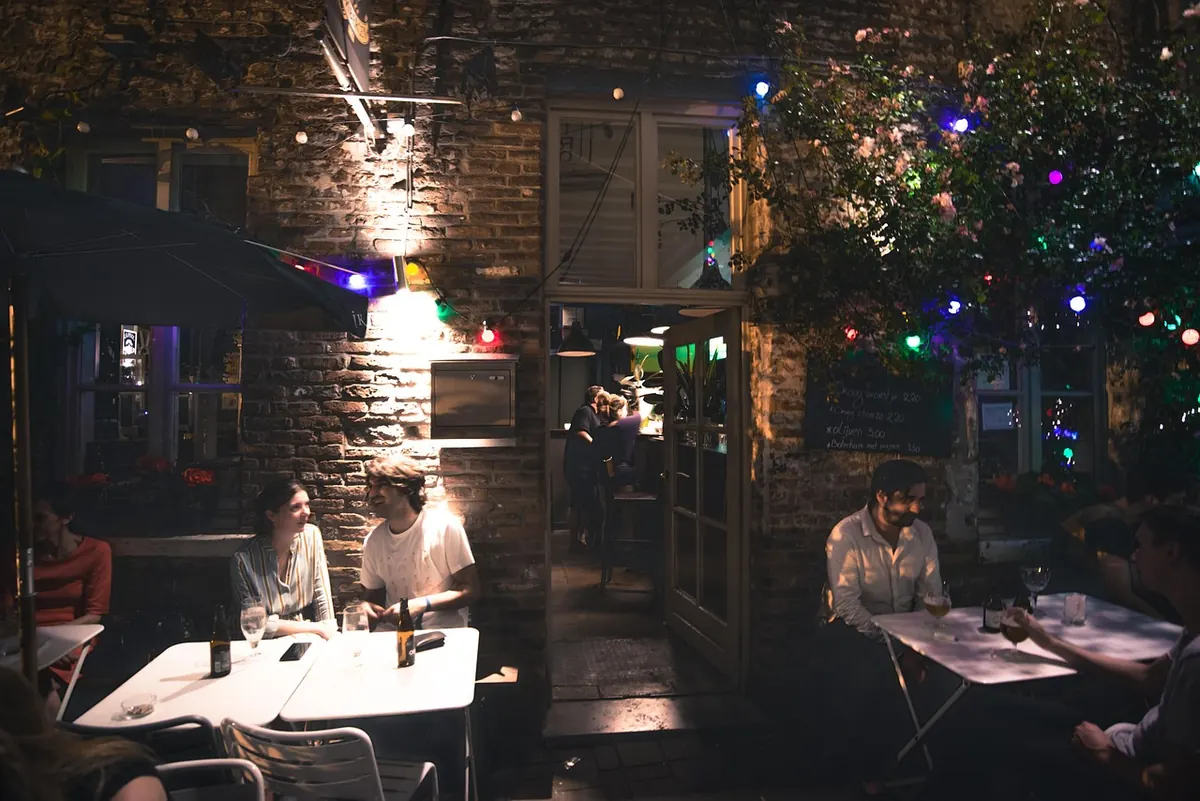
Island Terrace Lighting: A Beginner’s Guide to Warm, Low-Glare Evenings
The plates are cleared, the breeze has softened, and the terrace turns into the best room in the house. Then someone flicks a switch and a single white bulb flattens everything: faces go pale, the stone loses its colour, and the sea view turns into a black rectangle. It happens on almost every terrace, and it is entirely avoidable.
Good evening lighting is not about adding more light. It is about putting a small amount of warm light exactly where you need it, hiding the source, and leaving the rest of the terrace in comfortable shadow. If you can see a bare bulb from your chair, the light is in the wrong place. That single rule will get you further than any shopping list.
Start With the Evening, Not the Fixtures
Before you buy anything, describe how you actually use the terrace after dark. Dinner for six. A book and a glass of wine. A slow conversation that runs past midnight. A path from the kitchen door to the table that nobody should have to negotiate by memory.
Each of those needs a different amount of light in a different place. The dining table needs enough to see food clearly. A reading chair needs a pool of light at shoulder height. The path needs low markers so people can find the edge of a step without lighting the whole garden. Once you have named three or four of these moments, your lighting plan is mostly written.
Two technical choices matter more than the rest. First, colour temperature: aim for warm light, in the region of 2200K to 2700K. Anything above 3000K starts to look clinical against stone, terracotta and timber. Second, brightness: buy fixtures you can dim, or buy the lowest output you can find and add more of them. Ten gentle lights almost always beat two bright ones.
Build the Terrace in Layers
Think in layers rather than in lamps. A terrace lit in layers can move from a bright dinner to a quiet late-night glow by switching things off in the right order.
- Base glow. A soft ambient wash that stops the terrace feeling like a stage. Often one dimmed fixture aimed at a wall, or a string of festoon bulbs hung well overhead.
- Task light. Focused, purposeful light for the table, the grill, the steps, the doorway. This is the layer you dim or kill once the plates are gone.
- Accent light. Small uplights behind a planter, a lantern tucked near a wall, a light grazing a rough stone surface. It gives the eye somewhere to rest.
- Path and safety light. Low markers along changes in level. Never bright, never aimed at the seating area.
- Flame and candlelight. The layer that does the emotional work. Real or LED, it is what makes a terrace feel inhabited.
Solar Lights: Honest Limits, Good Uses
Solar lights have improved enormously, and on a sunny island terrace they make sense. But they need direct sun on the panel for most of the day, and they need to be chosen with a little care.
They work well on railings, in planters, along the edge of a deck, and anywhere a panel faces open sky. They struggle under a pergola, against a north-facing wall, in the shadow of a building, and in the weeks when the weather turns grey. If a spot gets less than four or five hours of direct sun, a solar fixture will fade by ten in the evening. Put a small wired light there instead, or accept that the spot stays dark.
Choose warm white, frosted lenses and modest output. Stake path lights at knee height rather than waist height, and keep them off the line of sight between chairs. Salt air leaves a film on panels faster than you would expect; a wipe with fresh water every few weeks restores most of the charge. In winter, bring the panels in or accept the shorter evenings.
Lanterns and Candles: The Warm Core
If you do one thing on a terrace, do this. A cluster of three lanterns at different heights on a dining table, or a pair of hurricane lamps on the floor by a bench, will do more for the atmosphere than any fixture on the ceiling.
Glass hurricane lanterns are the practical choice near the sea because they keep a flame alive in a breeze. LED candles inside them are reliable, safe and increasingly convincing. Real candles are lovely, and worth it on calm nights, but they need watching: never leave them burning unattended, keep them clear of fabric, dry plants and paper napkins, and stand them on stone or metal rather than timber, because the base gets hot. A candle that scents the air with citronella is useful in mosquito season, though keep it away from the food.
Light the table, not the terrace. The table is where people look.
Fixtures That Disappear
The best terrace lighting is the lighting you cannot see. Recessed step lights, small shielded wall lights and low-voltage uplights all work because the source is hidden and only the effect shows.
Mount wall fixtures below eye level when seated, roughly between 40cm and 70cm from the ground, and choose models with a hood or cowl that cuts the glare. Set uplights behind shrubs or planters so the light grazes leaves and wall rather than shining across the terrace. For festoon strings, hang them at 2.2 metres or higher, zigzag them rather than stretching a straight line, and prefer opaque or frosted globes over clear ones.
Because this is an island, buy for the climate. Look for fixtures rated at least IP44 for sheltered spots and IP65 where they face rain and spray. Stainless steel should be a marine-grade grade such as 316, and cable joints and transformers need to be outdoor-rated and kept off the ground. Cheap fittings corrode quietly and then fail at the worst moment.
Aim, Shield, Dim
Glare is mostly a matter of geometry. Walk onto the terrace in the evening, sit in each chair, and look around. Any bulb you can see from a seated position needs to be moved, shielded, or aimed elsewhere. A plant, a stone, a strip of wood or a proper cowl will all do the job.
Then dim. Set every dimmable circuit at its lowest usable level and raise it in small steps until the space feels right. Mark that position on the dial, because you will never find it again otherwise. Keep to one or two colour temperatures across the whole terrace; mixing warm and cool light makes even expensive stonework look uneasy.
A Simple Setup to Try This Weekend
You do not need to rewire anything to test the idea. Start with a single layer and add slowly.
- Put three hurricane lanterns on the dining table, one raised on a stack of two books or a small crate.
- Add two or three solar path lights along the route from the door, staked low and angled away from the chairs.
- Hang one festoon string overhead, high enough that nobody walks into it, and switch off any existing ceiling light.
- Sit down in your usual chair with the lights on, and remove or move anything that shines in your eyes.
That is the whole method: warm colour, low output, hidden sources, and light where people actually are. Everything else is refinement. Add a dimmer when you can, a shielded wall light next season, an uplight behind the biggest planter. The terrace will get softer every year, and nobody will ever notice the fittings — only that the evenings feel unusually good.
Photo: ClickerHappy / Pixabay
Related Articles