Terraces
Terrace Shade Planning: How to Choose Awnings, Pergolas, and Sail Shades
Shade on an island terrace is never just a style decision. It is a negotiation with the sun, the wind, and the salt that arrives with every breeze. The right solution keeps lunch cool without turning the terrace into a sealed room; it survives a sudden gust and still looks good after a season of bright light. The wrong one flaps, corrodes, or becomes so heavy to operate that nobody bothers. Before you compare awnings, pergolas, and sail shades, decide what you actually want from the shade: a cool corner for breakfast, a dining area that works at seven in the evening, or a soft screen that protects plants and cushions. That answer will narrow the choice faster than any catalogue.
Begin With the Sun, Not the Catalogue
Walk onto your terrace at three different times: mid-morning, early afternoon, and the hour when you usually use it. Note where the sun lands and where the wind comes from. On many islands the strongest sun is not the problem; the combination of glare and a steady breeze is. A west-facing terrace that is pleasant at noon may be unbearable at six. A north-facing terrace may need less shade but more wind protection.
- Measure the width and depth of the area you want shaded, including the swing of doors and the path to the stairs.
- Watch how wind moves through the space. A corner that funnels breeze will punish a wide sail or an open awning.
- Check what you can fix into: a solid wall, a concrete beam, a wooden fascia, or nothing but a parapet. The fixing points often decide the product.
- Think about the view. A pergola with narrow rafters filters light; a solid awning blocks it entirely.
Once you know where the shade needs to fall, judge each option by the same test: does it cover that spot at the hour you use it, and can you secure it without damaging the terrace?
Awnings: The Quick Cover
Retractable awnings are the easiest shade to live with. They attach to a wall or fascia, roll out in seconds, and disappear when not needed. For a terrace used mainly at lunch or for a short afternoon read, a good fabric awning is often enough. Choose a cassette model if the terrace is exposed; the fabric and arms are protected when closed, which matters in salt air. A wind sensor is not a luxury on an island. It retracts the awning before a gust turns it into a sail.
Be honest about limitations. A standard awning is not designed to stay out in strong wind or heavy rain. It shades one direction, so low evening sun can still come underneath. Fabric needs cleaning and eventually replacement. On a very exposed seafront, a fixed frame with a removable canopy may be more sensible than a long retractable arm. If you rent, check that you are allowed to drill into the wall; if you own, ask an installer to assess the fixing, not just the fabric colour.
Pergolas: A Room Without Walls
A pergola gives structure. It defines the dining area, supports lights and climbing plants, and can carry a retractable canopy or adjustable louvers. On an island terrace, the difference between a fixed pergola and an adjustable one is mostly about daily control. Fixed rafters give dappled shade and a sense of enclosure; louvered roofs let you open the slats to the sky or close them against rain. Both need proper anchoring, because a pergola catches wind like a box kite.
Fixed or adjustable?
Fixed timber pergolas suit relaxed, planted terraces and age gracefully if maintained. Powder-coated aluminium needs less fuss and resists salt better, but the coating must stay intact. Adjustable louvered pergolas are convenient but have more moving parts to service. Visit one in person if you can; listen to how it sounds in the wind and check whether the mechanism feels smooth.
Do not underestimate the fixing. A pergola bolted to a weak parapet or a single row of paving is a hazard in a storm. Ask about base plates, anchors, and how the structure will shed water. If the pergola is attached to the house, the connection to the wall matters as much as the roof. Local building rules may treat a fixed roof differently from a removable canopy; check before ordering. Professional advice on structural fixing is worth taking here, especially on exposed sites.
Sail Shades: Light Touch, Careful Anchoring
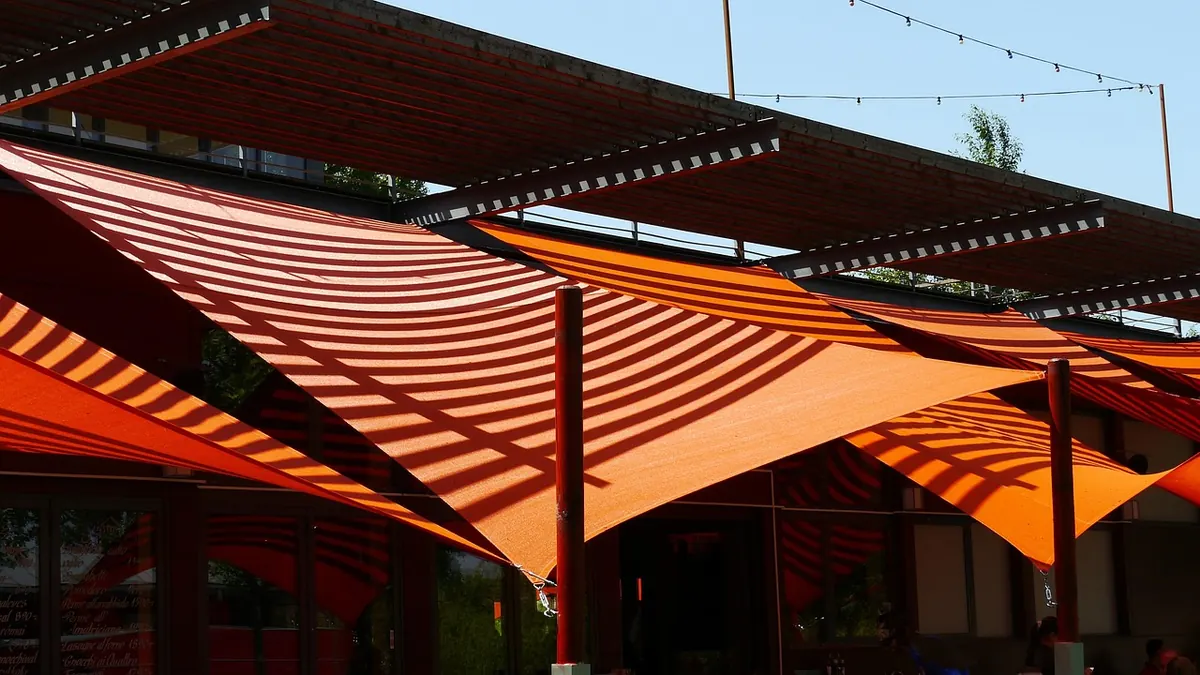
Sail shades are the most forgiving option for awkward spaces. A triangular or rectangular sail can be tensioned between a wall, a post, and a tree, covering a corner that no awning would fit. They are relatively inexpensive, easy to remove, and visually light. They also demand good anchors and a little patience. A sail must be taut; a loose one flaps, wears at the edges, and makes noise. The fixing points need to handle tension, not just weight.
Choose a breathable, UV-stable fabric and stainless-steel hardware. Galvanised fittings may be fine inland, but salt air is unkind. Angle the sail so rain runs off and wind spills around it rather than filling it. Take it down before a named storm or a strong seasonal wind; most sails are not permanent structures. In daily use, a sail gives soft, moving shade and lets heat escape, which is why it suits a hot island terrace well. It is less good at blocking low, slanting sun or rain.
Salt Air Changes the Math
Every material on a terrace works harder near the sea. Salt settles on fabric, frames, and fixings; combined with sun, it shortens the life of cheap components. The details matter more than the headline material.
- Fabric: look for solution-dyed acrylic or a breathable outdoor fabric with a warranty that mentions UV and mildew. Vinyl-coated fabrics are waterproof but can trap heat and moisture.
- Frames: powder-coated aluminium is a practical default; check that cut ends and scratches are treated. Timber needs regular oiling or sealing.
- Fixings: stainless steel screws, bolts, and shackles are worth the upgrade. Mixed metals can cause corrosion.
- Moving parts: awning arms, louver gears, and pulleys need occasional rinsing and lubrication. A stiff mechanism is a warning, not an inconvenience.
Rinse salt off when you clean the terrace, especially after a storm. Do not scrub fabric with harsh detergent; follow the maker's care note. Small maintenance now avoids a large replacement later.
Installation, Permits, and Daily Rhythm
Installation is where a good idea becomes a safe one. An awning needs a sound wall or fascia; a pergola needs footings or a properly engineered base; a sail needs anchors that can take tension in several directions. On a rooftop or a shared terrace, the structure may need permission from the building management or local planning office. Rules vary, and a fixed pergola or a permanent roof can trigger different requirements from a removable awning or sail. Check before you buy, and put the question in writing if you rent.
Daily use should be simple. If opening the shade takes two people and a ladder, it will stay closed. Choose controls you can reach: a hand crank at the right height, a remote that lives indoors, or a sail you can unhook from one side. Build a storm routine: close the awning, lower the louvered roof, remove the sail, and bring cushions inside. In winter, clean and dry everything before storage; a folded awning left damp is an invitation to mildew.
A Practical Closing: Match Shade to Your Week
Choose an awning if you want fast, flexible cover for a wall-mounted terrace
Photo: charlemagne / Pixabay
Related Articles